
Home Buying Cost Calculator (2026/27)Home Buying Cost Calculator
Adjust price and assumptions to update totals instantly.
Quick prices ▼
Advanced fee assumptions
Customise legal, survey and mortgage fees.
Edit
Band-by-band tax breakdown ▼
| Band | Taxable slice | Rate | Tax |
|---|---|---|---|
| Up to £125,000 | £125,000 | 0.0% | £0 |
| £125,001 to £250,000 | £125,000 | 2.0% | £2,500 |
| £250,001 to £925,000 | £100,000 | 5.0% | £5,000 |
| Total | £350,000 | — | £7,500 |
Estimates only. Confirm with your conveyancer and official calculators. Sources.
Selling a property too? All 7 tax packs, CGT included, are £9.99. See the pack library
Selling a property too? All 7 tax packs, CGT included, are £9.99. See the pack library
Not sure what comes next at your stage? Get my free home-buying check →
Cash you need — and when it's due
Deposit + costsThe all-in figure above is your tax and buying fees. But the real cash you need from savings also includes your deposit — and it's not all due on the same day. Set your deposit below to see the true total and the payment timeline.
Assumes a 10% exchange deposit (or your full deposit if smaller). Your lender, not this tool, sets the minimum deposit it will accept. Excludes mortgage interest, moving and ongoing costs. Estimates only — confirm exact figures with your conveyancer.
Your buying journey
Five stages from first viewing to getting the keys, with the free guide or calculator for each.
-
Work out the costs
Tax, fees and the cash you need on completion day, before you offer.
-
Check the property
What it sold for, its energy rating, flood risk and planning history.
-
Survey and conveyancing
Choose a survey level and compare conveyancing quotes on the total.
-
Offer to exchange
The questions to ask, the mortgage fees and what to check before you are committed.
-
Completion
When the money goes, paying the tax on time and the costs of moving in.
Home buying guides: plain English, worked examples
Checked against 2026/27 HMRC, Revenue Scotland and Welsh Revenue Authority rates.
Conveyancing Fees UK 2026: Typical Cost £1,200–£2,500 All-In
Typical conveyancing solicitor fees for buying a house in the UK are usually around £1,200 to £2,500 including disbursements. This guide covers solicitor fees, Land Registry, searches, leasehold extras and how to compare quotes properly.
What Is Stamp Duty? UK Rates & Bands 0%–12% (2026/27)
Understand how property transaction tax is calculated across the UK and how to budget with confidence before making an offer.
How to Check a House Before Buying: 12 Free Checks (England)
Before you offer, you can check most of what matters about a house yourself, free, from official records: what it sold for, how likely it is to flood, how efficient it is, whether it is listed, and what is planned next door. Here are the 12 checks, in order, with the link for each.
House Survey Costs Explained
Choose the right survey scope for your property type and risk appetite, then budget survey cost in your all-in plan.
The Hidden Costs of Buying a House in 2026 (The Ones People Forget)
Most buyers budget for the deposit and the stamp duty. It is the smaller, easy-to-forget costs around them that quietly add thousands to what you actually need at completion.
How to Find Out What a House Sold For (Free, England and Wales)
Every residential sale in England and Wales since January 1995 is in a free HM Land Registry database. Here is how to search it, how to read the record, why some sales are missing, and how to use it to judge an asking price.
First-Time Buyer Stamp Duty Relief Explained (2026/27)
First-time buyers in England and Northern Ireland pay no stamp duty on the first £300,000 and 5% on the part up to £500,000, saving up to £5,000. Here is who qualifies, what happens near the £500,000 limit and the edge cases that remove the relief.
Questions to Ask Before Making an Offer on a House (2026)
An offer is not binding in England and Wales until exchange, but a weak one costs you the house and a rushed one costs you money. These are the questions to put to the agent first, why each matters, and which answers to check against official records.
When Do You Pay Stamp Duty? 14 Days After Completion (2026/27)
Stamp duty is due after completion, not exchange. In England and Northern Ireland the SDLT return and payment are due within 14 days of completion; Scotland (LBTT) and Wales (LTT) allow 30 days. Your conveyancer files and collects it at completion — late filing triggers interest and penalties.
Conveyancing Fees in Scotland 2026/27: Solicitor Fees, Outlays and LBTT
What it really costs to buy a home in Scotland in 2026/27: solicitor fees, outlays, Registers of Scotland dues, the Home Report, LBTT and how the Scottish offer system changes the timeline.
Three quick steps to estimate total upfront cash
Stamp duty rates across the UK, 2026/27
Property purchase tax has a different name and different bands in each nation: Stamp Duty Land Tax (SDLT) in England and Northern Ireland, Land and Buildings Transaction Tax (LBTT) in Scotland, and Land Transaction Tax (LTT) in Wales. Each is charged in progressive bands, so only the slice of the price inside each band is taxed at that band's rate. Here are all three side by side.
England & Northern Ireland (SDLT)
| Portion of price | Standard | Additional property |
|---|---|---|
| Up to £125,000 | 0% | 5% |
| £125,001 to £250,000 | 2% | 7% |
| £250,001 to £925,000 | 5% | 10% |
| £925,001 to £1.5m | 10% | 15% |
| Above £1.5m | 12% | 17% |
First-time buyers: 0% up to £300,000 and 5% on £300,001 to £500,000. No relief if the price is above £500,000.
Scotland (LBTT)
| Portion of price | Rate |
|---|---|
| Up to £145,000 | 0% |
| £145,001 to £250,000 | 2% |
| £250,001 to £325,000 | 5% |
| £325,001 to £750,000 | 10% |
| Above £750,000 | 12% |
First-time buyers: the nil-rate band rises to £175,000. Second homes: an Additional Dwelling Supplement (ADS) of 8% applies to the whole price on additional dwellings of £40,000 or more (some contracts entered into before 5 December 2024 can still qualify for 6%).
Wales (LTT)
| Portion of price | Main rate | Higher (additional) |
|---|---|---|
| Up to £180,000 | 0%* | 5% |
| £180,001 to £225,000 | 0%* | 8.5% |
| £225,001 to £250,000 | 6% | 8.5% |
| £250,001 to £400,000 | 6% | 10% |
| £400,001 to £750,000 | 7.5% | 12.5% |
| £750,001 to £1.5m | 10% | 15% |
| Above £1.5m | 12% | 17% |
*Wales has no first-time buyer relief; the main-rate nil band already covers the first £225,000. The higher rates apply when buying an additional property.
Rates for the 2026/27 year, checked against GOV.UK, Revenue Scotland and GOV.WALES. Enter your price in the calculator above and pick your nation to see the exact figure for your purchase. Estimates only, not advice.
Popular property-price scenarios
These are common planning routes from search. Start with the nearest scenario page, then adjust assumptions in the calculator for your actual quote inputs.
What this calculator separates clearly
For reliable offer planning, keep each cost category separate first, then combine them into a total completion-cash estimate.
What actually leaves your account before completion
Stamp duty gets the attention, but it is rarely the part that catches buyers out. On a £300,000 purchase as a standard buyer you pay £5,000 in SDLT — and roughly £2,699 in conveyancing, search, survey and lender fees on top. That is £7,699 of cash needed before you get the keys, and only two thirds of it is tax.
The reason this trips people up is that the two halves behave differently. Tax rises in steps as the price climbs: the same fee set on a £400,000 purchase still sits near £2,699, while the SDLT doubles to £10,000, taking the all-in figure to £12,699. Below about £250,000 the fees are usually the larger number; above it the tax takes over. Budgeting from the tax alone understates a cheaper purchase badly.
None of it can be spread out. SDLT must reach HMRC within 14 days of completion, and your conveyancer files it as part of completing. Some lenders will let you add it to the mortgage, but you then pay interest on it for the full term. Treat the whole figure as cash you need available before you exchange.
Learn about buying costs
Use the calculator first, then open the guides below if you need details on stamp duty bands, country differences, or typical fee ranges.
Plan beyond completion day
A lot of buyers model stamp duty and legal fees but under-plan monthly ownership costs. Before offering, run a quick monthly stress test.
- Use this calculator for upfront completion cash.
- Add recurring monthly costs before setting your offer ceiling.
- Keep a maintenance buffer so surprises do not break your budget.
Why two buyers at the same price pay very different totals
The purchase price on its own tells you almost nothing about the tax bill. At £400,000 a standard buyer pays £10,000 in SDLT. Buy the same house when you already own another property — including one held overseas — and the 5% surcharge applies to the entire price, not just the portion above a threshold, taking it to £30,000. That £20,000 gap is the single largest swing on most transactions.
First-time buyer relief moves it the other way. On a £350,000 purchase the relief brings SDLT down to £2,500 against £7,500 for a home mover, because the first £300,000 is charged at nothing and only the balance is taxed at 5%. The relief stops entirely above £500,000, so a first-time buyer at £520,000 pays exactly what anyone else would.
Where you buy matters just as much. Scotland charges LBTT, with nothing due below £145,000 and an Additional Dwelling Supplement of 8% rather than 5%. Wales charges LTT, where the nil-rate band runs to £225,000 — the most generous starting point of the three. A purchase that attracts tax in England can be tax-free in Wales at the same price, which is why the calculator asks for the nation before it gives you a figure.
Explore buying costs by price
Jump to a price point for a full band-by-band tax and fee breakdown, or explore common buyer scenarios below.
City buying cost guides
Stamp duty and total cost estimates for major UK cities.
Frequently asked questions
How is stamp duty calculated in England and Northern Ireland?
SDLT is charged in progressive bands. For 2026/27: 0% up to £125,000; 2% on £125,001–£250,000; 5% on £250,001–£925,000; 10% on £925,001–£1.5m; 12% above £1.5m. Only the portion of the price in each band is taxed at that rate. On a £400,000 house, total SDLT for a standard buyer is £10,000. On a £475,000 house, it is £13,750.
What stamp duty relief do first-time buyers get?
In England and NI, first-time buyers pay 0% on the first £300,000 and 5% on £300,001–£500,000. No relief applies above £500,000. On a £350,000 first-time purchase, SDLT is £2,500 versus £7,500 for a standard buyer — a saving of £5,000. Scotland has its own LBTT first-time buyer relief (nil-rate band £175,000, saving up to £600); Wales has no first-time buyer relief. Use the region selector in the calculator to see exact figures.
What are typical solicitor fees for buying a house?
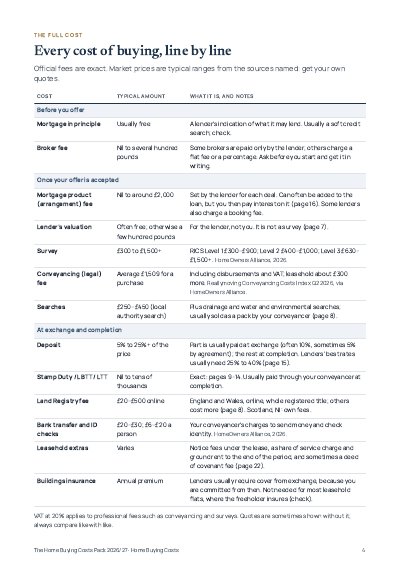
Typical conveyancing solicitor fees for buying a house are around £800–£1,800, with disbursements such as searches and Land Registry often adding another £300–£700. Surveys and lender fees sit on top, so total non-tax buying costs often add £2,500–£4,000 before completion.
How does Scotland's LBTT differ from England's SDLT?
Land and Buildings Transaction Tax (LBTT) replaced SDLT in Scotland in 2015. The nil-rate band starts at £145,000 (vs £125,000 in England). Rates: 2% on £145,001–£250,000; 5% on £250,001–£325,000; 10% on £325,001–£750,000; 12% above. Scotland's Additional Dwelling Supplement (ADS) is 8% — higher than England's 5% surcharge. Wales uses Land Transaction Tax (LTT) with its own bands starting at £225,000. Select your nation in the calculator for exact figures.
What is the additional property surcharge?
If you already own any residential property — including overseas — you pay a surcharge on the full purchase price: 5% in England and NI (since October 2024), 8% ADS in Scotland, and in Wales a separate higher-rates table (5% to 17% by band). On a £400,000 additional property in England, the 5% surcharge adds £20,000 to the £10,000 standard SDLT — a combined bill of £30,000. Select 'Additional property' in the buyer type selector to see the full breakdown.
When do you pay stamp duty, and can it be added to a mortgage?
SDLT must be paid within 14 days of completion — your conveyancer handles submission to HMRC as part of the completion process. It cannot be spread over time. Some lenders will allow you to add it to your mortgage, but you will pay interest on it for the mortgage term. It is best to have stamp duty available as cash before you exchange contracts.
What is the free home-buying check?
Six quick questions about the price, where you are buying, whether it is your first home, your mortgage and your stage. It shows your upfront tax and fees from the same engine as the calculator, what to check next at your stage and a short checklist. It is free and needs no account or email.
What is the difference between the Property Report and the Costs Pack?
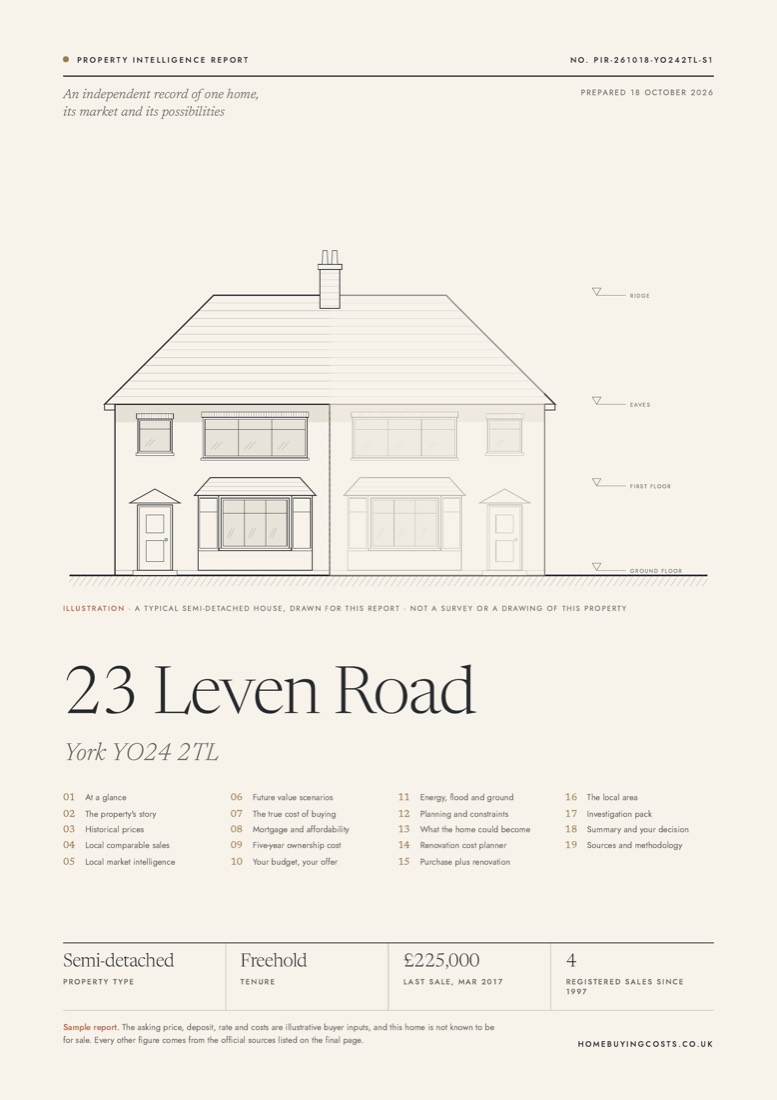
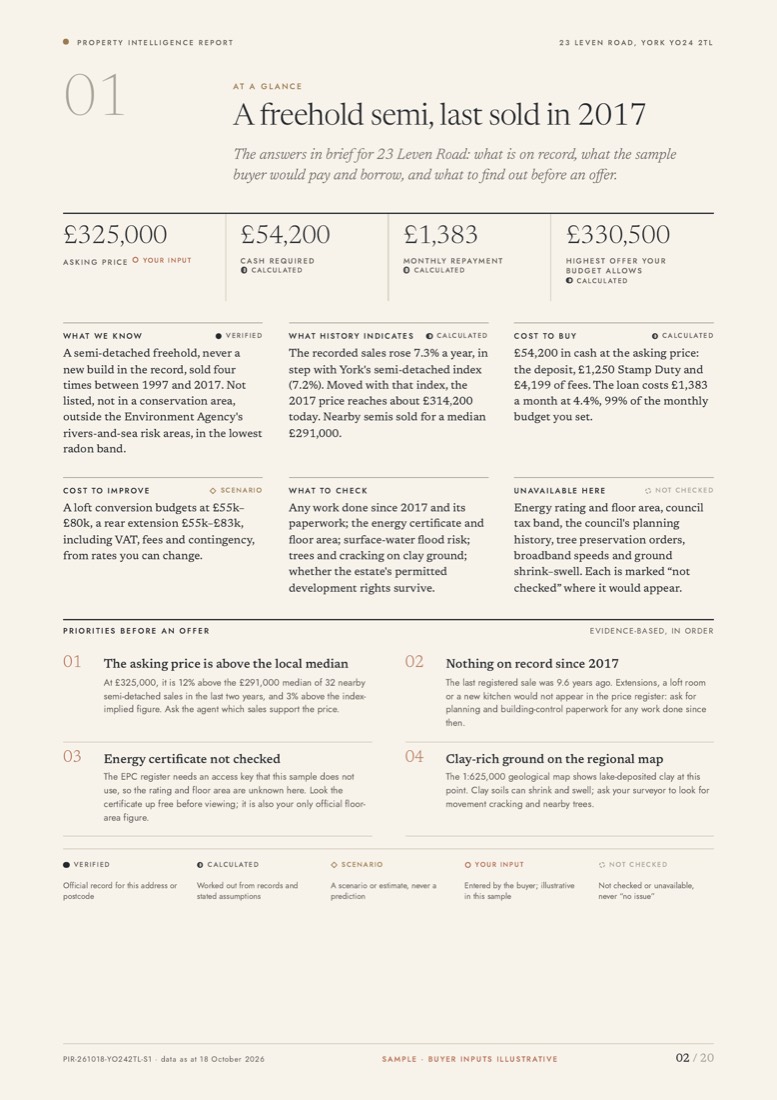
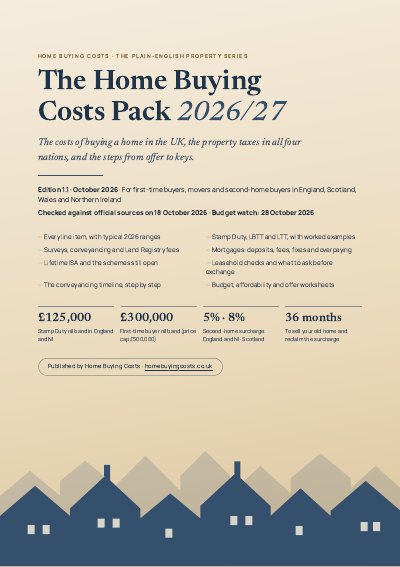
The Property Intelligence Report (£4.99) is about one home in England: its sale history, nearby sales, flood, planning and energy checks, what it will cost you to buy and own, and the questions to ask before you offer. The Home Buying Costs Pack (£4.99) is a 30-page PDF about the costs of buying any home in the UK, with worksheets. The report includes the pack.